
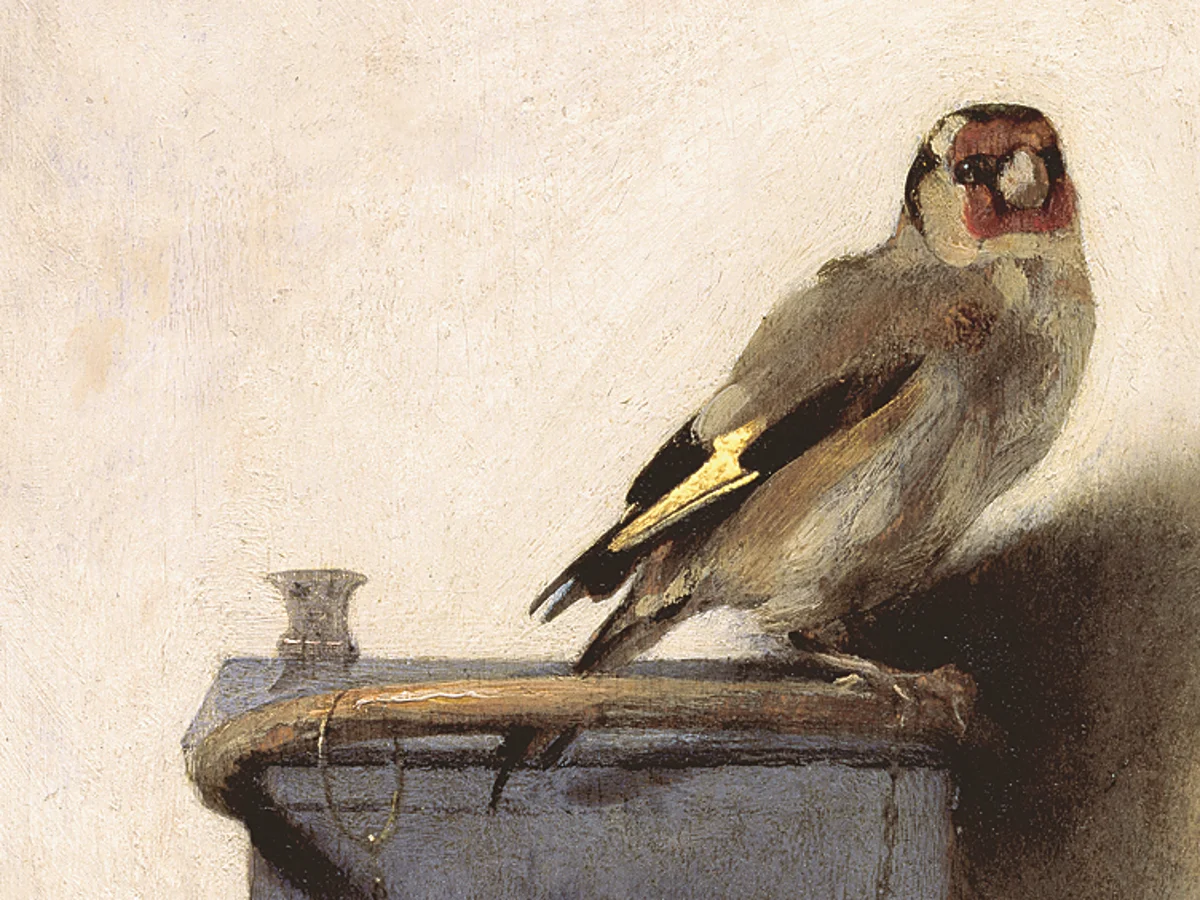
To begin with this random-thought review, take a look at the protagonist. Théo is a cliche but he didn’t have to be. A character who struggled through the difficulty of drug use, of choosing another way, would have been so much more interesting. The struggle is what we identify with and that which also acts as an indictment on our own lives to press forward and do better. We don’t need any morose misery-keeps-its-company-type empathy any more than we need another Oreo flavor. We need, rather, literary characters who rise up against adversity through struggle, not with ease. Never with ease.
Walking around Disney this weekend with my niece and nephew, I found myself lamenting the choices Théo makes, spending my worry on him and his drug habit and the ultimately unhelpful friendship of Boris, wishing he had at least stayed in touch with Andy. And I suppose therein lies the power of Tartts’ writing. Any piece of literature that begins to feel more like memory than fiction is, in my opinion, doing at least half its job. Where The Goldfinch fails is in its refusal to offer any way out of the cyclical search for something that turns out to be nothing.
A Vicious Cycle
I have no issue with Tartt’s writing, but rather what she has to say with it. It’s not, in the end, helpful to the human existence. It could have been. I’ve read articles commenting on the Dickensian nature of her novels, especially The Goldfinch, but let us remember the defining lift of redemption and hope and humor in the narrator’s voice, “And Tiny Tim, who did NOT die,” at the end of A Christmas Carol. Or how Oliver finds wealth and a family. This is what The Goldfinch misses, though there are ample opportunities for redemption in multiple character arcs.
I enjoyed the book; I stayed up way later than I usually do to read it and finished all 700-something pages in less than a week (though towards the end I was forcing myself to continue once I realized the character was not going to grow). It is, as Independent on Sunday wrote, “A gripping page turner”.
A Dickensian Plot
The first fifty pages were some of the most immersive, emotional, gut-wrenching, what-is-life pages I’ve ever read. But though I kept getting drawn in with her detail and suspense, I was left pondering, What’s it all for? This goes especially for Théo’s extended drug-induced trip through Las Vegas, which, other than to establish him firmly in a cliché (how many times can I use the word cliché in one review?) drug habit and to kill off his dad, had no meaning for the plot or the painting whatsoever. I get that The Goldfinch is a collision of genres. Tartt doesn’t seem to concern herself with adhering to the boundaries of one or the other, and I respect that. It’s coming of age, romance, suspense, etcetera, etcetera. That’s where the Dickensian connection comes in. There are complex plots, and many characters, each distinct and well-detailed. But, for such a tactic to work, the elements of the various genres must blend seamlessly together to one final, satisfactory (satisfactory to the plot, not happily ever after) end, and they don’t.
Character Holes
Having suffered the trauma of the explosion at the beginning of the story, Théo was left with tinnitus, a fear of crowded and small spaces, and PTSD, and yet these are only mentioned once or twice and at such random parts of the book, like afterthoughts. Tartt introduces what would absolutely be daily struggles for Théo years down the line. His tinnitus isn’t mentioned at all until 500 pages in. The same goes for his dislike for small and crowded spaces like the movies.
His business acumen springs from nowhere. We jump eight years, and suddenly, he’s got business sense though he learned it from no one. Perhaps we can credit his father’s shrewdness, but in the end, his father comes up poor, so maybe not. We might be tempted to assume he learned something from countless afternoons spent in the shop with Hobie, but Hobie is a self-professed business ignorant.
And then it isn’t until after 600 pages that we learn Théo feels any connection with Welty. without whom there would be no story. He says his link to Welty is something he feels deeply, but there’s little evidence for that in the story. Supposedly his friendship with Pippa is of great interest and importance to him. Despite what he says about Pippa, she has very little impact on his character growth. Each interaction with her is experienced through a haze of distance, and those interactions are so infrequent or so infrequently discussed, that the reader is a bit blindsided when Théo drops her into the narrative, unceremoniously.
One could make the argument: that the book is written in Théo’s voice. Therefore, we only ever see and know what he sees and knows, and that he, in his ignorance and naïveté might not know or be aware of certain things, or think them important. He lacks self-awareness and certainly seems to have no guidance whatsoever. We do that when we tell stories about ourselves. We leave out the details we find insignificant. In a way, I guess by keeping true to that style of storytelling, Tartt wants us to have an authentic understanding and view of Théo. But then again, what thirteen-year-old thinks or talks like this kid? He’s looking at his youthful self through a skewed lens, telling us the story at least ten years post-accident, in his mid to late twenties. As a young adult, he thinks he has insight and perspective, as he often calls out his own naïveté, but how could he when he has truly allowed growth for his character?
Ultimately, this book is an entertaining cop-out. It’s easier to write about some posh derelict with self-destructive tendencies. It’s easy (and I imagine fun) to write about the unhinged when there are no boundaries, no struggle or tension, only the giving in. Much harder to write about a character fighting against the darkness, seeking true redemption. But redemption is only found and experienced when one is open to receive it. Neither Tartt nor her protagonist Théo seem to be.
***
Authors Note: Thank you for reading my article and I hope you enjoyed it. Feel free to hold down those little clapping hands till they hit 50 and leave your thoughts or links to articles you’ve written or think might be of interest. If you’d like to see more of my writing, check out some similar posts below.



Leave a Reply